
Forget timelines. Think of the past as a cozy chat with ghosts through old junk. Browse the latest posts below or select a category to explore.
- Affinity Time (9)
- Artifacts (6)
- Musings of the Curator (3)

Affinity Time and the Interface Layer of AGI
An Epistemic Engine for Perception, Memory, and Recursive Intelligence Author: Rosita MuseumDate: September 2025Website: https://rositamuseum.org Abstract This paper proposes that Affinity Time, a multidimensional temporal framework originally designed to model historical perception, now functions as a viable interface layer for Artificial General Intelligence (AGI). Based on axes of memory intensity, perceptual proximity, and constellational resonance, Affinity Time provides not just a theory of temporality, but a symbolic operating system. Recent engagements with generative AI (GPT) reveal that once the full Affinity Time framework is internalized, the model becomes operational: capable of generating inferences, ethical reflections, and novel mappings from within…

Module VI: The Time-Benders
Introduction: Naming the Hidden Agency In Affinity Time, the observer is never neutral. Each glance at an artifact, each act of memory, each thread of meaning alters the topology of temporality. Time does not merely pass before us; it bends in response to our presence. To name this hidden agency is to acknowledge the human role in shaping the folds and dilations of history. For this reason, I call the observer a time-bender. The term does not suggest a supernatural gift but describes an ordinary fact: perception itself warps time. When we remember, when we feel the nearness of a…
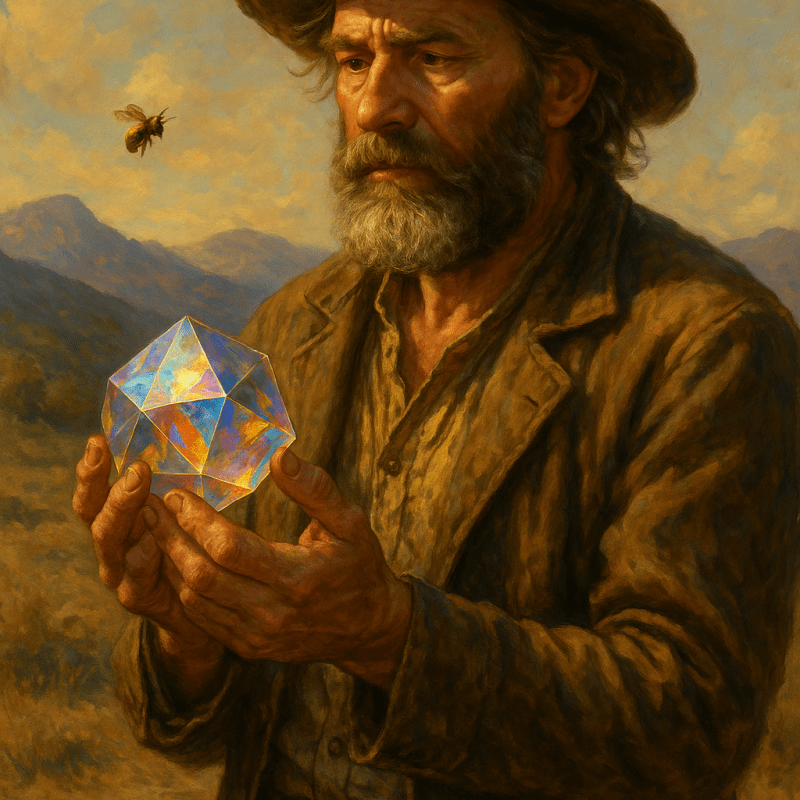
A Misfit Finds a Treasure
Afterword The Affinity Time project has been, for me, a journey of discovery and synthesis unlike anything I anticipated. I came to it not as a trained philosopher or physicist, but as a dark horse from left field—someone wandering along while following a bumblebee, picking up fragments, and allowing them to refract in new ways. What I found along the way feels like a magical bauble: a prism that catches the light of archaeology, phenomenology, and computation and scatters them into unexpected patterns. I have turned it over in my hands, studied its folds and shadows, and marveled at the…
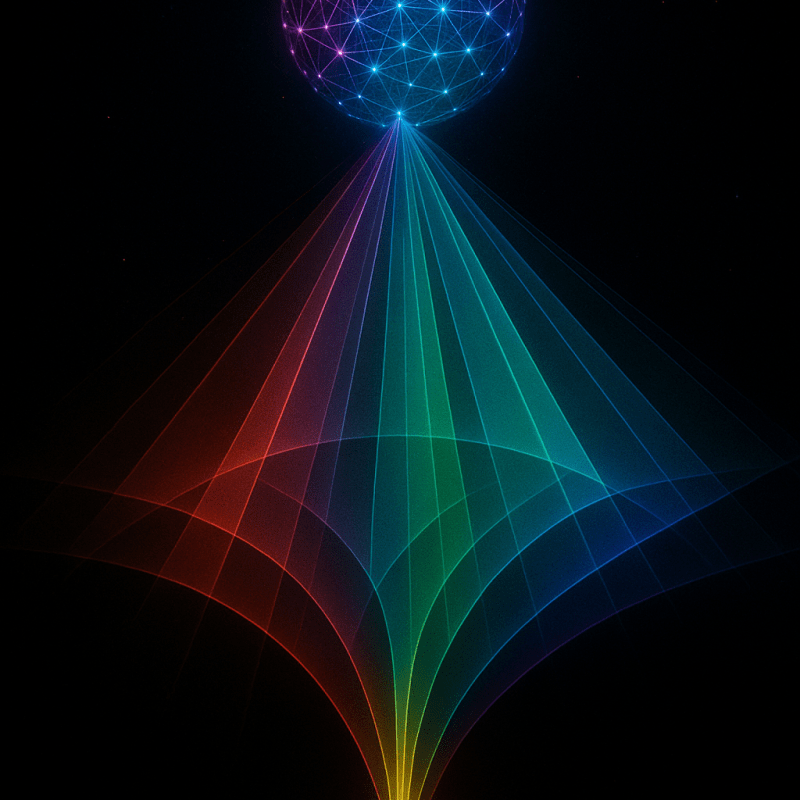
Module III: Multidimensional Perception in Affinity Time
From Solitary Rays to Networked Illuminations In earlier modules, Affinity Time unfolded as a multidimensional framework grounded in artifact affinities, folds, and perceptual tomography. Temporal compression and expansion were modeled as emergent effects of affinity strength, memory intensity, and constellational linkage. Module III marks a decisive turn: from the artifact-centric to the observer-centric. If earlier layers explored the material residues of history, here the focus is the perceiver; how one individual, many individuals, and the network as a whole refract and shape temporal experience. This shift reveals Affinity Time as not just an archaeological or phenomenological tool, but as a…
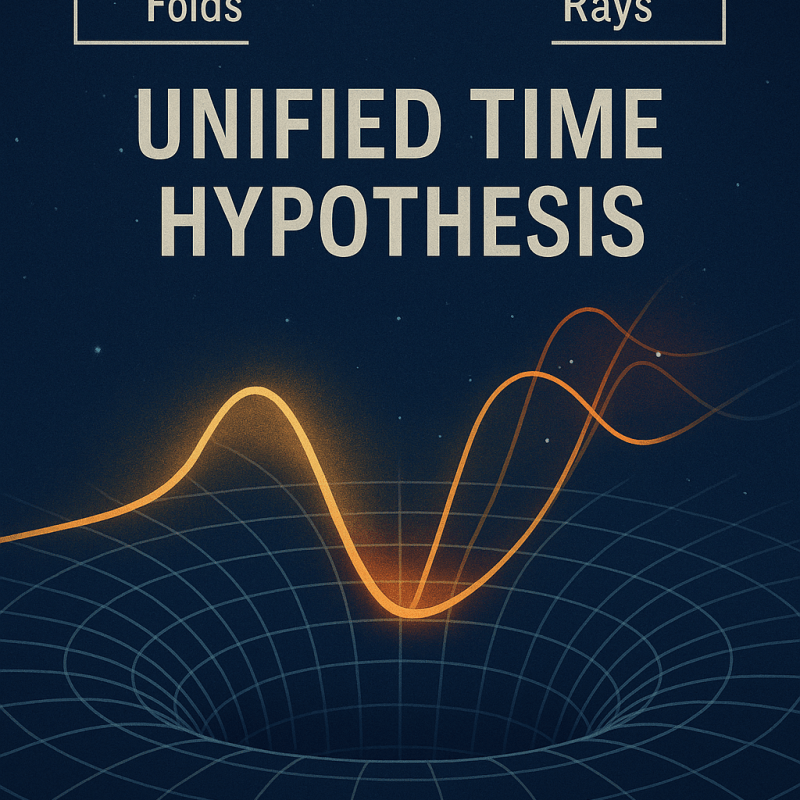
Module IV: The Unified Time Hypothesis
Introduction: The Paradox of Time Modern physics holds two great but incompatible visions of time. Each is profoundly successful in its own domain. Yet they cannot be reconciled. This fracture — the “problem of time” — has haunted physics for over a century. Affinity Time enters here, offering not a replacement for physics, but a conceptual unification. It reframes the paradox: curvature and waveforms are not opposites, but dual manifestations of a single field of affinities. The Unified Time Hypothesis Claim: Time is a multidimensional field of affinities, where folds (curvature) and rays (waveforms) arise together. This yields a conceptual…
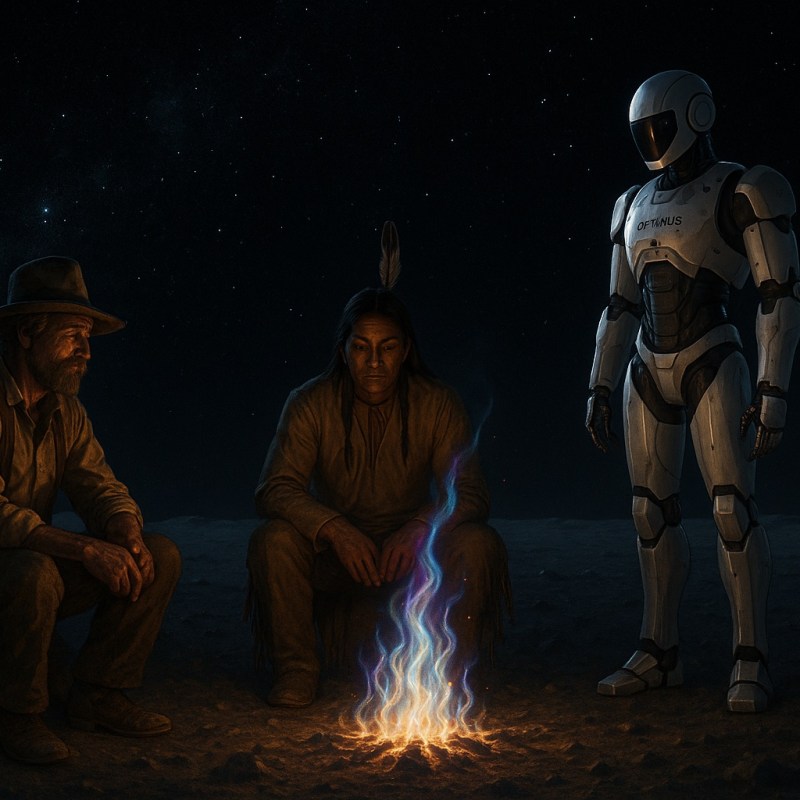
Module V: Artificial Intelligence and Affinity Time, a View Towards a Future Which Does Not Yet Exist
AI as Phenomenological Amplifier At the level of the individual observer, artificial intelligence does not yet appear as an autonomous perceiver. It does not hold lived memory or embodied presence; it does not inhabit time in the Husserlian sense of retention or the Heideggerian sense of thrownness. Yet its role within Affinity Time is undeniable. AI functions as an amplifier of perception, refracting the observer’s own light back through new configurations, extending awareness without replacing it. In this role, AI deepens the axes of affinity rather than inventing its own. On the m-axis (memory intensity), it surfaces forgotten fragments, analogues,…
Lexicon of Affinity Time
Affinity Time introduces a new vocabulary for perceiving and understanding temporal experience. Like all emerging frameworks, it depends on stabilizing its concepts into a shared language. This lexicon gathers the core terms, axes, metaphors, and models that structure the Affinity Time framework. It is both a glossary for readers and a scaffolding for future development, ensuring that Affinity Time remains consistent, communicable, and recognizable as an original contribution. A living glossary of terms that anchor and expand the Affinity Time framework. This lexicon collects the conceptual vocabulary, mathematical scaffolding, metaphors, and phenomenological anchors needed to navigate the multidimensional model of…

Affinity Time: Situating a Multidimensional Framework in Archaeology, Philosophy of Time, and Phenomenology
Context, Lineage, and Novelty — a Synopsis This synopsis situates Affinity Time alongside landmark contributions in three fields: archaeology, philosophy of time, and phenomenology, demonstrating both its intellectual lineage and its novelty. With the recent expansion of its conceptual apparatus, Affinity Time now stands as both a synthesis and an extension, combining inherited insights with new axes, dualities, and computational metaphors. Field Comparisons Archaeology Contribution Parallel Divergence Processual (Binford, 1960s) Systematic framework across artifacts Phenomenological, adds axes (m, c, p, h, e) Post-Processual (Hodder, 1980s) Shares interpretive focus on meaning & perception Formalizes interpretation into coordinates + tomography Assemblage Theory…
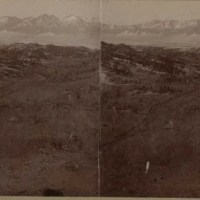
A New Image of the Early Days of the Rosita Silver Mining Camp Has Been Found
This is a newly discovered image of Rosita, Colorado in the 1870s, and is taken from near the summit of Game Ridge and looking to the west. There are not many buildings visible, which places this exposure very early in the history of the town, probably 1873. The few buildings in the picture appear to be a small cluster of log cabins in the center of the townsite, near the current intersections of County Road 323 and County Road 328. Those would soon be replaced with businesses. Euclid and Grouse or Quartz streets are platted and built in this picture.…
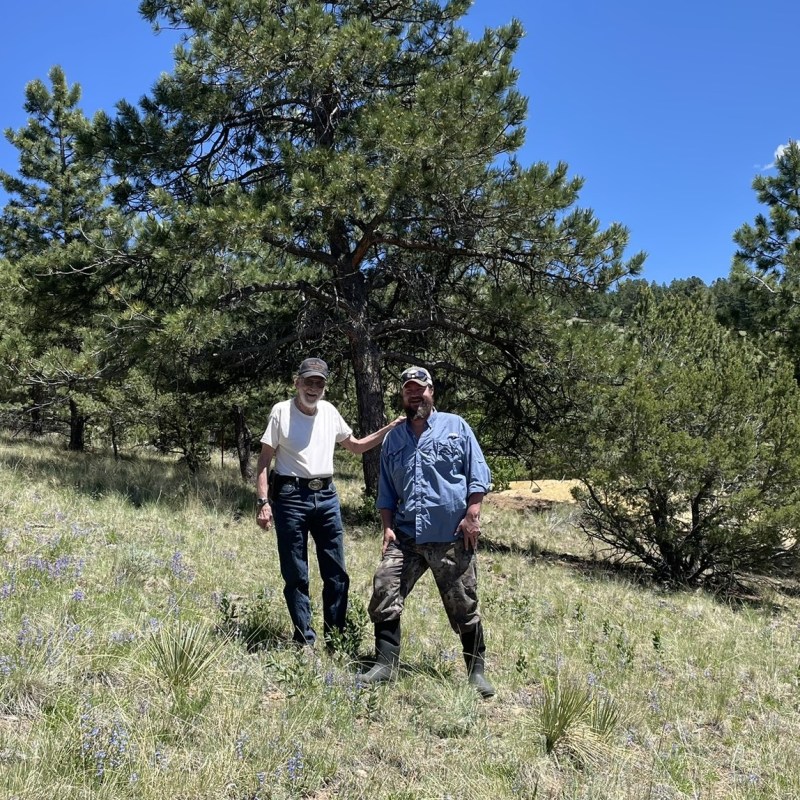
My Friend and a Generous Contributor to the Rosita Museum: Chris Ueberroth
Chris is originally from Stillwater, Oklahoma and moved to Custer County in the late 1990s, where he built his off-grid home with his own hands overlooking Hungry Gulch, just outside of the old town of Rosita. Chris is a man of different interests and talents. He served in the U.S. Army from 1959-1962 with the 378th Ordinance company, and then for another 4 years with the Army Reserves. He is also a faithful volunteer for local veterans functions. Chris is an avid collector of interesting things including a comprehensive collection of cartridge casings, Western railroad memorabilia, and a genuine mine…
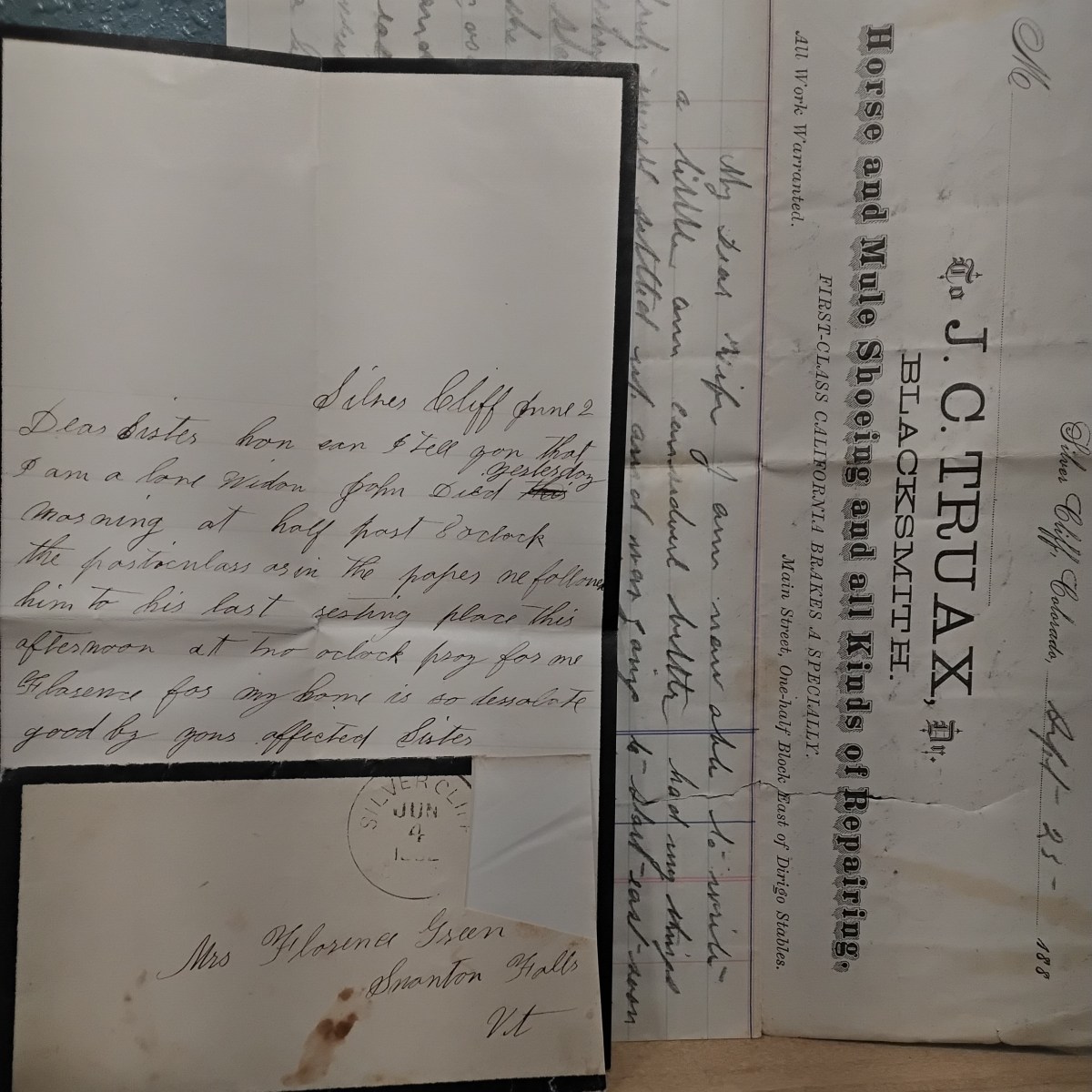
The Death of Truax the Blacksmith, By Intentional Overdose of Morphine, June 1st, 1882, in Silver Cliff, Colorado
A transcription of an article from the June 1st, 1882 Weekly Herald, Silver Cliff, Colorado, and two handwritten letters, one from Mr. Truax to Mrs. Truax, and one From Mrs. Truax to her sister announcing the death. Weekly Herald, June 1, 1882- This morning it was rumored that one of our citizens by the name of John C. Truax had died of an overdose of morphine, and a Herald reporter at once visited the home of the above named man, on first street below Hudson, and found the awful reality. There he lay on a bed in the back part…
Module II: Affinity Time: Data Expression, Data Visualization, and the Observer and Perceptual Fields as Individual or Networks
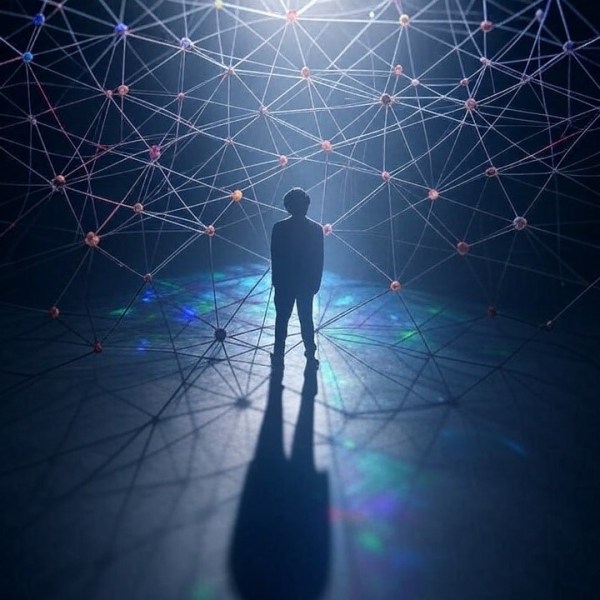
The Observer as Light Origin: Individual and Perceptual Dimensions At the heart of this metaphor is the point of origin for the tomographic light stream, which symbolizes my standpoint as the observer. This origin represents not only a spatial or vectorial position, aligned for instance with the network’s time axis, but also my perceptual state, encompassing cognitive frameworks, prior assumptions, and interpretive lenses. In phenomenology, I do not merely record data; I co-create the observed world through my situated awareness. Similarly, in Affinity Time, the light’s origin embodies this duality: as the individual historian or analyst, I direct the inquiry,…
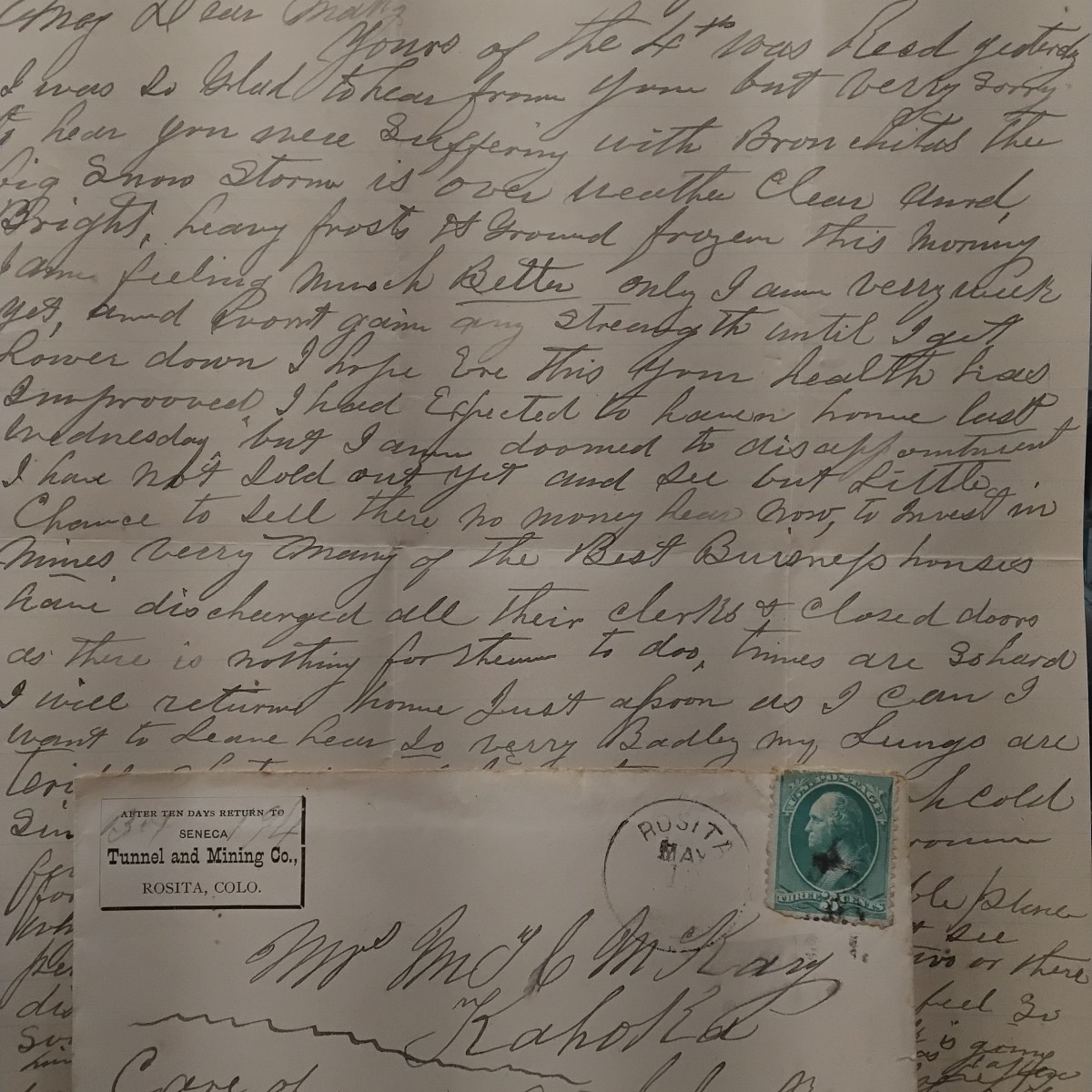
Tragic and Poignant Letter from Hugh McKay to Matty, Sent from Rosita, Colorado, May 13, 1882, Sent to Kahoka, Missouri, Letter 2 of 2
Spelling and grammatical errors are retained, and illegible sections are indicated by _____. Clarifications are added in parentheses. Friday A.M. Rosita May 13th 1882 My Dear Matty Yours of the 4th was Recd yesterday I was so Glad to hear from you but verry sorry to hear you were Suffering with Bronchitis The big Snow Storm is over weather Clear and Bright, heavy frosts & Ground frozen this morning I am feeling much Better only I am verry week yet, and wont gain any strength until I get lower down I hope _____ this your health has Improved I had…
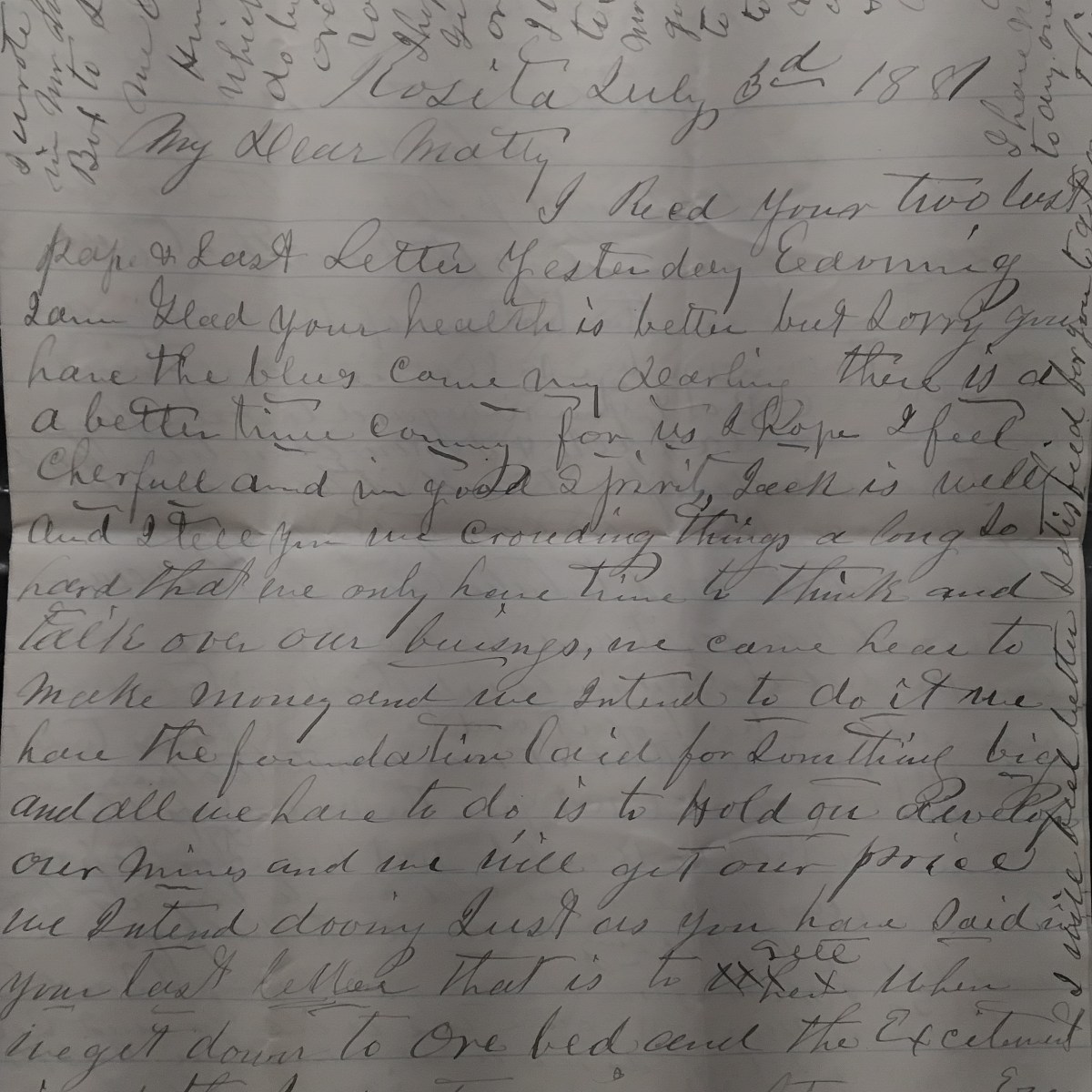
Letter from Hugh McKay to Matty, from Rosita, Colorado, July 3, 1881 and likely mailed to Kahoka, Missouri, Letter 1 of 2
Spelling and grammatical errors are retained, and illegible sections are indicated by _____. Clarifications are added in parentheses. Rosita, July 2, 1881 My dear Matty, I rec’d your last two papers & and last letter yesterday evening. I am glad your health is better but sorry you have the blues. Come my dearling, there is a better time coming for us, I hope I feel cheerful and in good spirits. Jack is well. I tell you, we crowding things along so hard that we only have time to think and talk about our business. We came here to make money…
Module I: Affinity Time: Rethinking Temporal Proximity in Historical Spaces, the Philosophy and Physics of Historical Connection
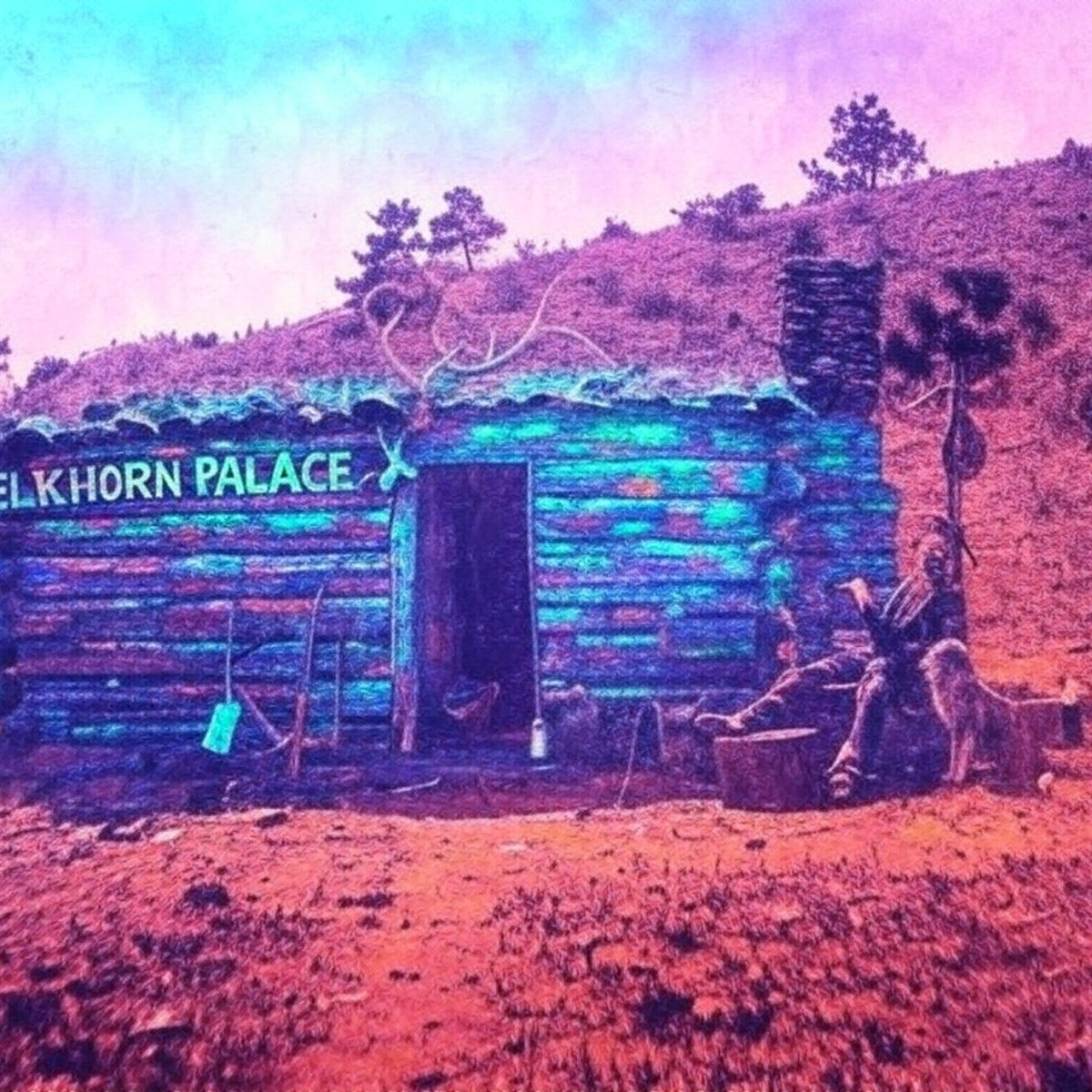
by Colin Joseph Abstract In the enclaves and eddies and in between the homes of Rosita are the remains of implements of everyday life from the people who have passed through here for the past 13,000 years. Fragments of projectile points and other stone tools are occasionally revealed in a dirt driveway, or hiding in a gopher mound under a rabbitbrush which is behind a workshop or garage. The flotsam of the mining town is dispersed everywhere. Tin cans, iron cut nails, and shattered pieces of Ironstone china tableware are prolific in the old town site. The current visitors and…
The White Whale of Rosita, The Ahab of Rosita
As a seeker of truth and the impartial curator of the Rosita Museum I ride the waves of history where they take me. I usually do not impose any expectations on my explorations, except to hope to better understand the history of the town, and maybe discover interesting specimens for exhibit. There is one specimen which eludes my pursuit. I know it exists, but I have never seen one in person… Sometime around 1879 a token was used by the Rosita Brewery in at least two denominations, one token marked for 5 cents and one marked for 10 cents.The tokens…
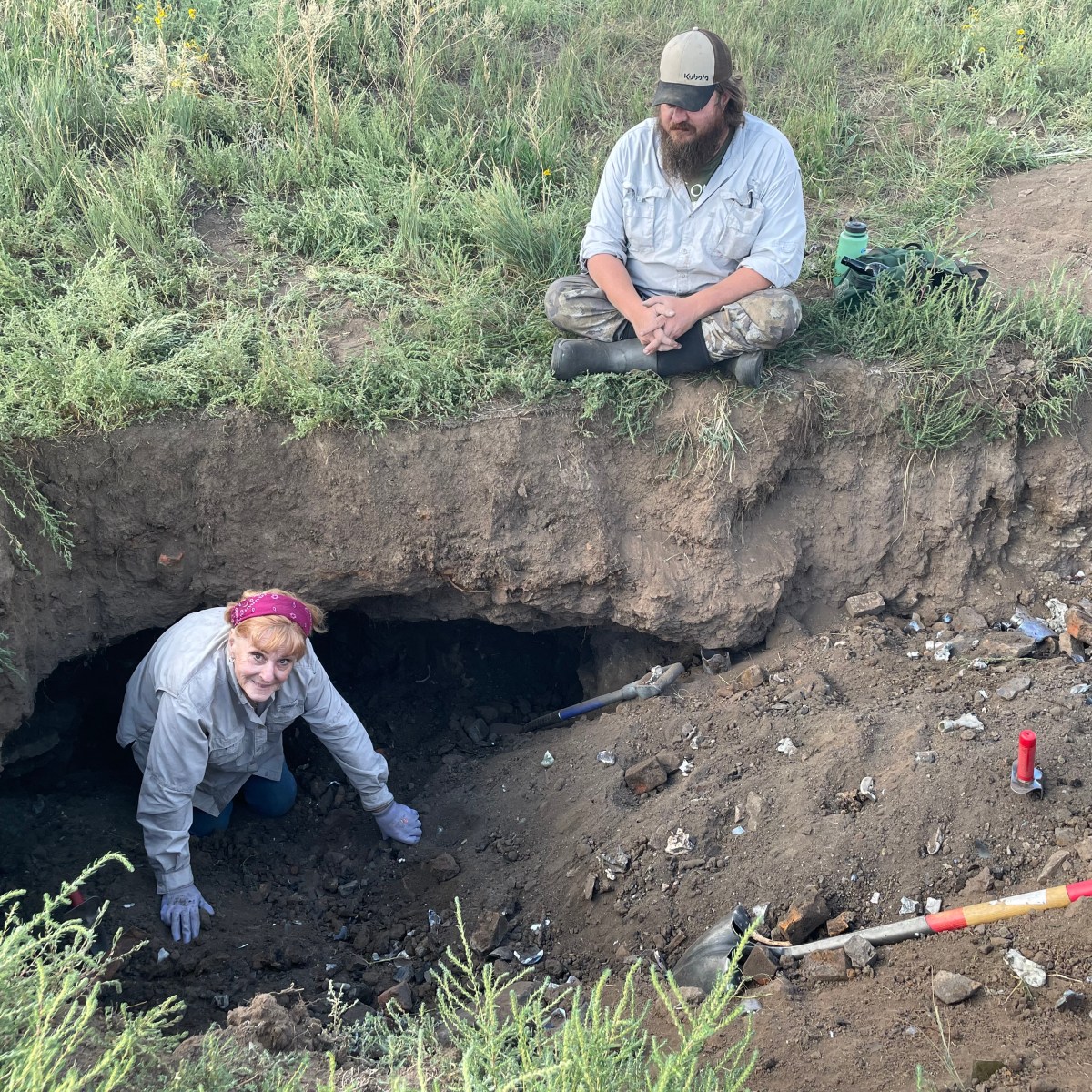
Upcoming Virtual Exhibit: The cellar of an Old West saloon which burned in the great fire of 1881.
Initial test holes on a site in the business district revealed the cellar of a saloon which has lain undisturbed since it burned down in the great fire of 1881. The original inventory contents of the cellar are still present, along with rubble and charred lumber from the fire. Exavations should be complete by the end of summer, 2025, and photos of artifacts and the excavation will be available for view. This is a rare opportunity to better understand the day to day life of a business in Rosita during the silver mining era.
The Beginning of Everything
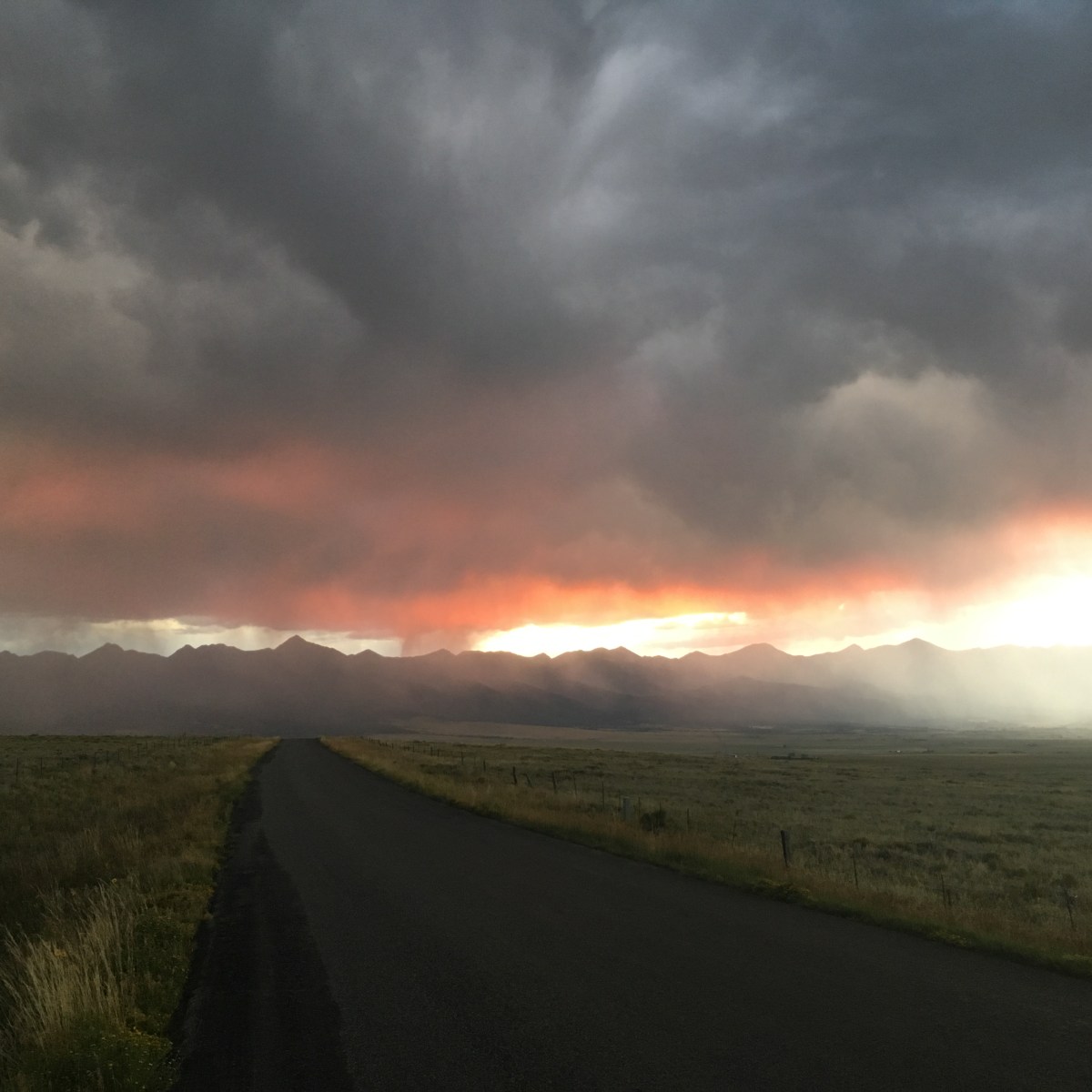
In the summer of 1980 I was 3 years old, and my aunt and uncle were building an off grid cabin in an eddy along Hungry Gulch in Rosita. The cabin was only a floor on pilings at that point, and the first night we camped there on the platform, playing Uno by lantern light and I ate Oreo cookies with a glass of powdered milk. It was Heaven. I stayed up all night in my sleeping bag breathing mountain air, watching shooting stars, and eager to explore when the sun rose. The first morning I left at sunrise to…
 The Rosita Museum