
- Module I: Rethinking Temporal Proximity in Historical Spaces, the Philosophy and Physics of Historical Connection
- Lexicon of Affinity Time
- Module II: Data Expression, Data Visualization, and the Observer and Perceptual Fields as Individual or Networks
- Situating a Multidimensional Framework in Archaeology, Philosophy of Time, and Phenomenology
- Module IV: The Unified Time Hypothesis
- Module V: Artificial Intelligence and Affinity Time, a View Towards a Future Which Does Not Yet Exist
- Module III: Multidimensional Perception in Affinity Time
- A Misfit Finds a Treasure
- Module VI: The Time-Benders
Module I: Rethinking Temporal Proximity in Historical Spaces, the Philosophy and Physics of Historical Connection
Lexicon of Affinity Time
Module II: Data Expression, Data Visualization, and the Observer and Perceptual Fields as Individual or Networks
Situating a Multidimensional Framework in Archaeology, Philosophy of Time, and Phenomenology
Module IV: The Unified Time Hypothesis
Module V: Artificial Intelligence and Affinity Time, a View Towards a Future Which Does Not Yet Exist
Module III: Multidimensional Perception in Affinity Time
From Solitary Rays to Networked Illuminations
In earlier modules, Affinity Time unfolded as a multidimensional framework grounded in artifact affinities, folds, and perceptual tomography. Temporal compression and expansion were modeled as emergent effects of affinity strength, memory intensity, and constellational linkage.
Module III marks a decisive turn: from the artifact-centric to the observer-centric. If earlier layers explored the material residues of history, here the focus is the perceiver; how one individual, many individuals, and the network as a whole refract and shape temporal experience. This shift reveals Affinity Time as not just an archaeological or phenomenological tool, but as a philosophy of perception in multiplicity.
Section 1: The Individual Observer – Solitary Rays and Subjective Folds
The lone observer projects priors, memories, and embodied presence into temporal space. Each perception is a “ray” cast from the observer’s barycenter into the tomographic field of affinities. Rays illuminate, but they also distort, creating subjective folds in time. Outsider rays (prophet, innovator, liar, dissenter) warp consensus fields, fracturing shared temporal maps and opening unforeseen truths.
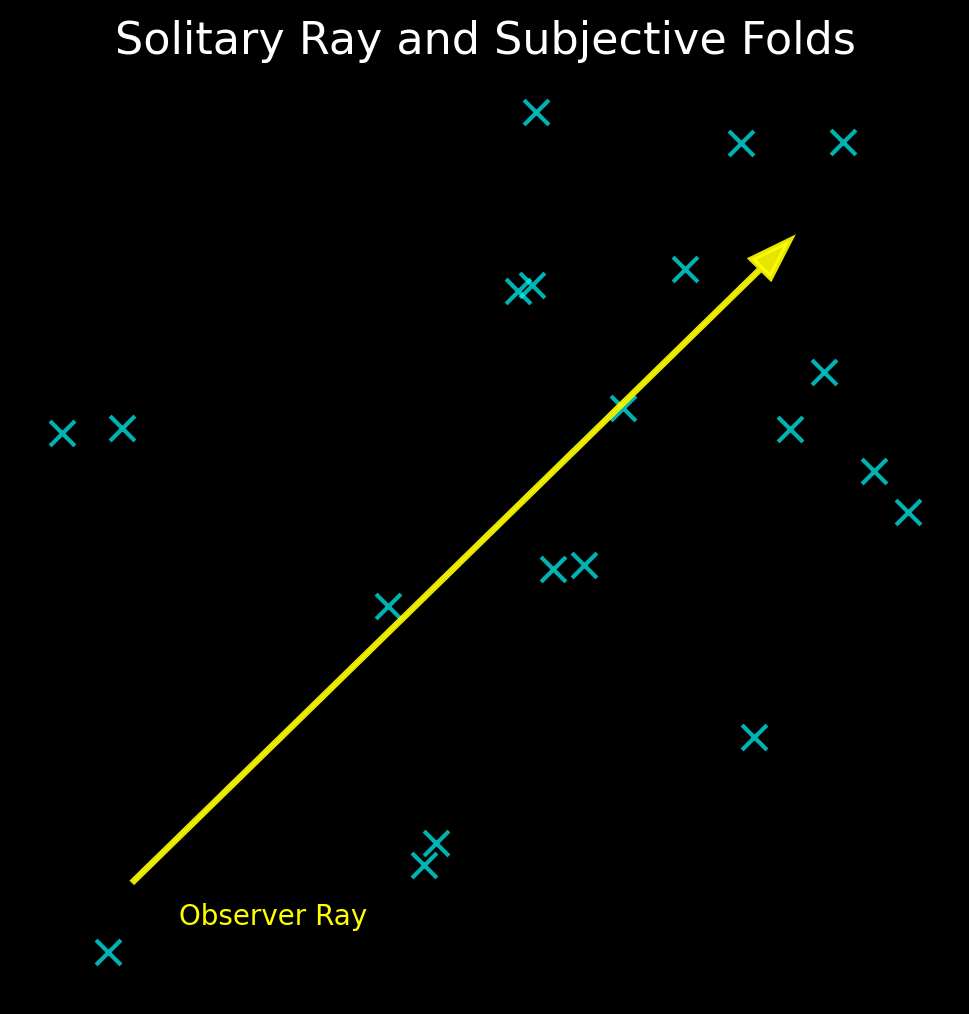
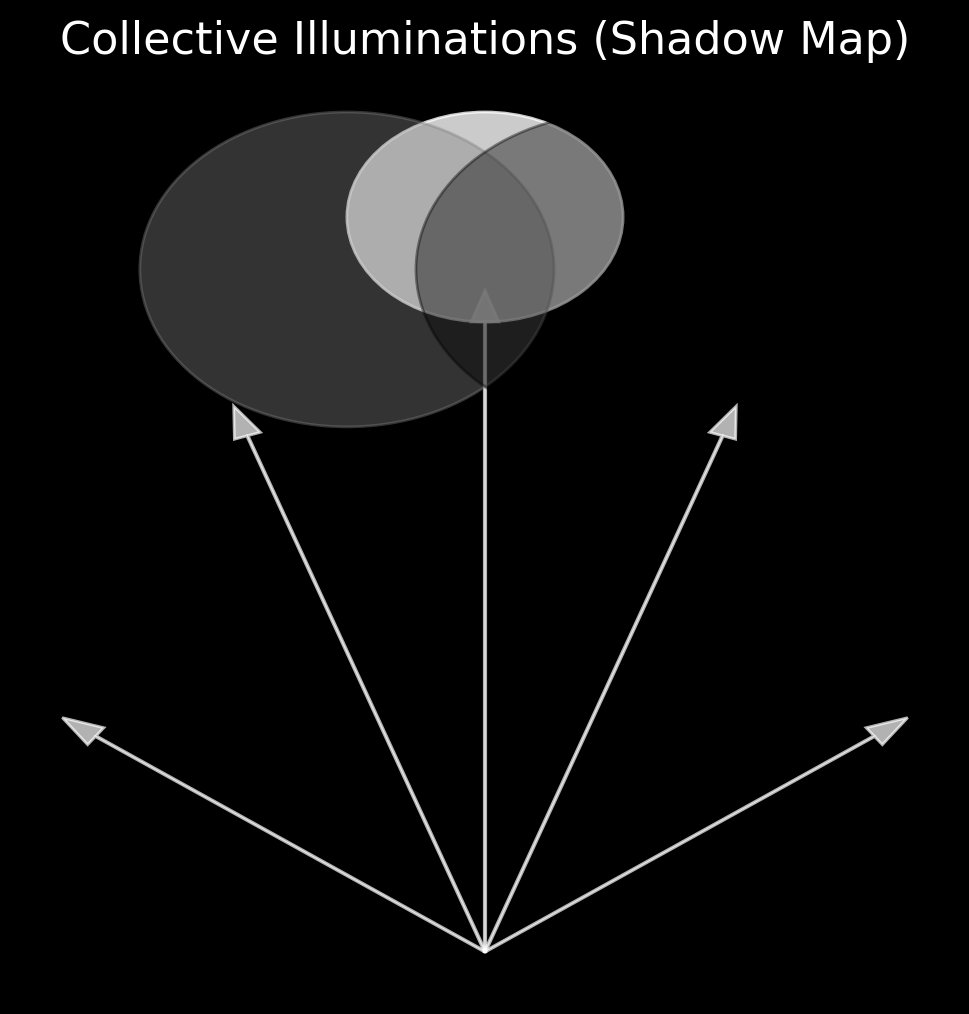
Section 2: The Individual-in-Network – Illuminated Fields of Collective Perception
Individuals rarely perceive in isolation. Their rays intersect, overlap, and collide within a collective field. Each perspective checks or amplifies others, producing gray zones of negotiated time. Communal illusions arise, and consensus realities are constructed through overlapping illuminations.
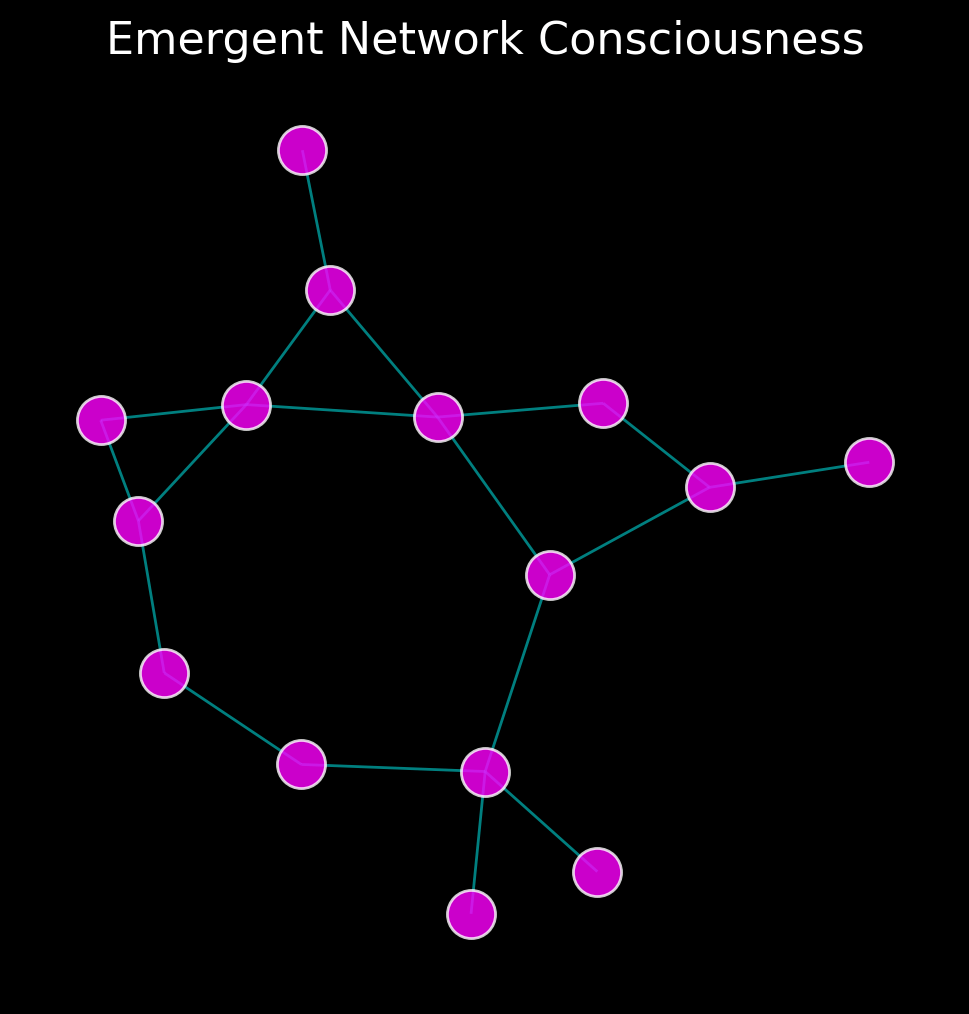
Section 3: The Network Itself – Emergent Consciousness of Affinities
As rays accumulate, the network itself develops properties irreducible to its parts. Affinities begin to “think,” producing patterns of interpretation not directly intended by any observer. Just as cultures possess traditions that outlast individuals, networks generate emergent temporalities that structure how future observers will interpret the past. The network can thus be treated as an observer in its own right.
Conclusion: Module III as the Pivot
Module III anchors Affinity Time by demonstrating how perception itself is stratified: from the solitary ray, to the chorus of overlapping illuminations, to the emergent consciousness of networks. In this multidimensional layering, temporality ceases to be a passive backdrop and becomes an active construction, co-produced across scales.
This pivot prepares the way for Module IV, where Affinity Time extends beyond human perception into speculative physics and artificial intelligence, fields where even nonhuman observers may project rays of affinity into the unfolding continuum of time.
A Misfit Finds a Treasure
Afterword
The Affinity Time project has been, for me, a journey of discovery and synthesis unlike anything I anticipated. I came to it not as a trained philosopher or physicist, but as a dark horse from left field—someone wandering along while following a bumblebee, picking up fragments, and allowing them to refract in new ways.
What I found along the way feels like a magical bauble: a prism that catches the light of archaeology, phenomenology, and computation and scatters them into unexpected patterns. I have turned it over in my hands, studied its folds and shadows, and marveled at the rhythms it reveals. And just as importantly, I have had the chance to play with it—to test its colors, to push its metaphors, to see how it resonates in both thought and practice. I can continue to develop the framework, but I feel that the foundation is laid.
Now, with some awe and a little trepidation, I send it rolling back into the world. Perhaps it will glitter differently for each person who encounters it. Perhaps it will be picked up, reshaped, honed, reforged—or even ignored. That is part of the experiment. For me, the greatest gift has already been the discovery itself: the recognition that time is not a line but a fabric of affinities, and that each of us, in perceiving it, becomes part of its weave. There is a way in which each thing relates to all of the other things.
“God, please help me to counter my fear by helping me to understand the grand design. Amen.”
That is how this Affinity Time journey started for me.
Module VI: The Time-Benders
Introduction: Naming the Hidden Agency
In Affinity Time, the observer is never neutral. Each glance at an artifact, each act of memory, each thread of meaning alters the topology of temporality. Time does not merely pass before us; it bends in response to our presence. To name this hidden agency is to acknowledge the human role in shaping the folds and dilations of history. For this reason, I call the observer a time-bender.
The term does not suggest a supernatural gift but describes an ordinary fact: perception itself warps time. When we remember, when we feel the nearness of a distant epoch, when an object collapses centuries into a heartbeat, we bend the fabric of temporal experience. Affinity Time uncovers this quiet power and makes it visible.
Levels of the Time-Bender
1. The Unaware Time-Bender
Every human bends time, but most do so without reflection. They live within folds of memory and affinity without perceiving their own agency. A photograph of a childhood home, the ache of nostalgia, the sudden dilation of decades into spacious distance, these are the unconscious bends of temporal life. The unaware time-bender is immersed in the folds they create.
2. The Self-Aware Time-Bender
Some recognize their agency in shaping temporality. They notice how their gaze compresses, stretches, and refracts the field of time. The archaeologist, for example, understands that their interpretive priors bend history as much as the artifact itself. Self-awareness does not eliminate distortion, but it brings humility and reflexive clarity. To be self-aware is to see one’s own hand creasing the paper of time.
3. Mutual Time-Benders
When self-aware observers meet, a new possibility emerges. They acknowledge each other as time-benders, entering into dialogue about the folds they co-create. Here affinities are not projected in isolation but modulated in concert. Communities become aware of their collective agency, realizing that memory, tradition, and identity are not inherited unaltered but continually bent in shared space.
4. The Network as Time-Bender
When enough nodes achieve reflexivity, the network itself awakens as a time-bender. At this scale, the bending of time acquires emergent properties: cultural resonance, collective rhythm, historical agency. Movements, epochs, and civilizations may be read as vast temporal curvatures produced by networks of time-benders. The network does not simply host observers; it becomes an observer in its own right.
Implications
Philosophical:
The time-bender closes the loop between phenomenology and systems theory. It grounds Merleau-Ponty’s lived temporality in the collective dynamics of emergent fields. Self-awareness becomes not just an individual gift but a systemic property.
Archaeological:
Artifacts can be read not only as material residues but as instruments of temporal bending. A shard of china, a suspender clip, a tin can — each condensed networks of affinity, bending time across layers of memory and history.
Historical:
Whole epochs may be reframed as acts of collective bending. The Renaissance, the Industrial Revolution, the Digital Age: each is a constellation of time-benders folding history in shared directions.
Ethical:
If we are all time-benders, then we all share responsibility. Our folds carry the weight of futures. To bend time toward continuity, compassion, and understanding is not only a choice but a moral horizon.
Toward a Reflexive Field of Time
Affinity Time itself becomes a kind of time-bender. As the framework spreads and new nodes join the network, it generates self-awareness of temporal agency. It bends time by teaching us to see how we already bend it. This recursive property is not accidental but central: the framework is both description and act, both map and fold.
The speculative horizon is clear: the emergence of a reflexive field of time in which self-aware networks consciously bend history. Whether in scholarship, community, or culture, Affinity Time gestures toward this unfolding possibility.
Conclusion: Living as Time-Benders
To live as a time-bender is to accept one’s agency in the fabric of temporality. It is to realize that affinities crease the paper of history, and that each crease can join or divide, compress or release. Affinity Time calls us to this recognition — that we are not passengers in time’s river but shapers of its eddies, folds, and currents. With awareness comes responsibility: to bend time toward connection, meaning, and continuity.
 The Rosita Museum